
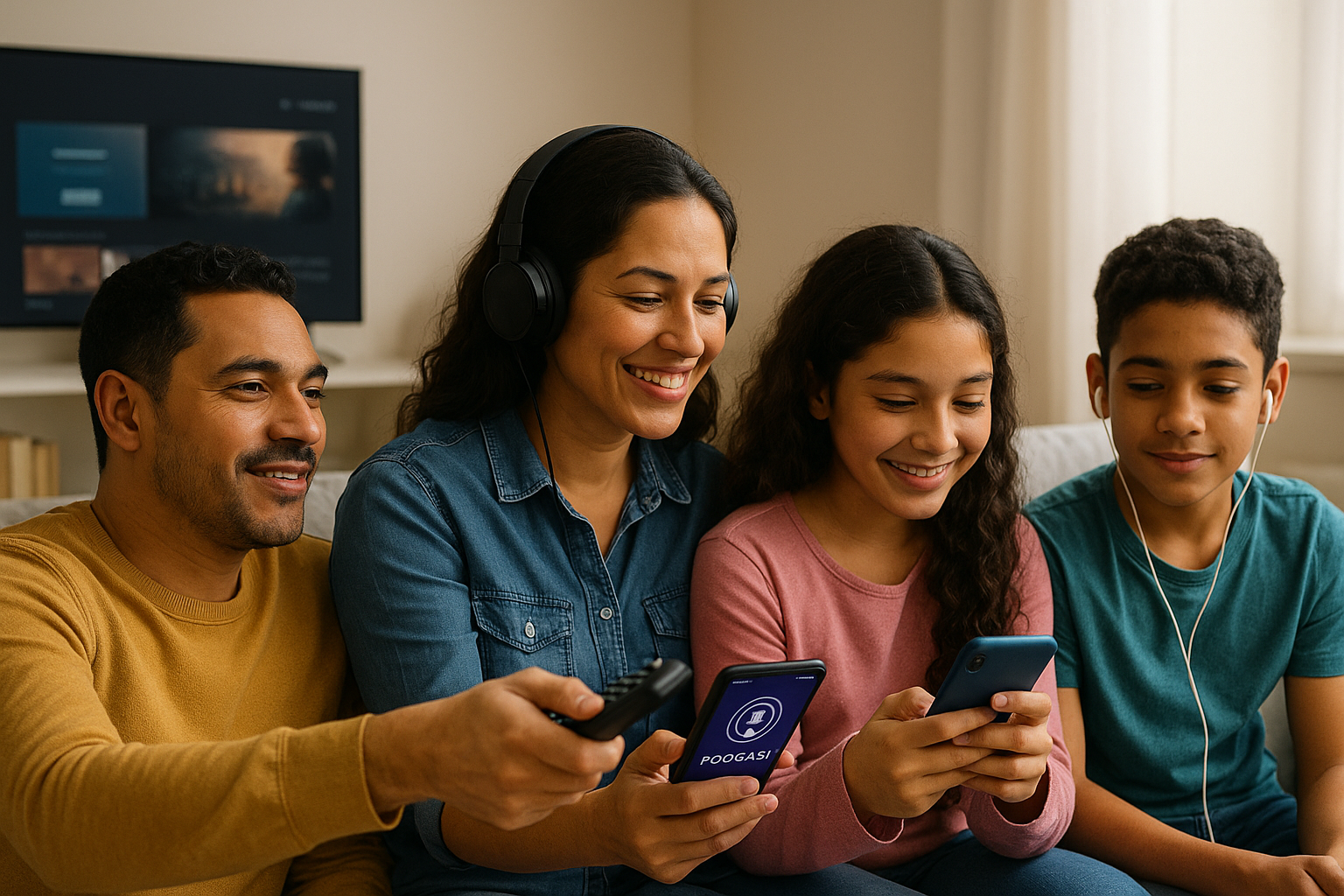
The media consumption habits of the U.S. Latino population have undergone a significant evolution, shifting from traditional platforms to a dominant embrace of digital and on-demand content. This transformation reflects broader technological changes but is uniquely shaped by the Latino community’s demographic characteristics, cultural preferences, and increasing influence across the nation’s markets.
Overall Shift Towards Digital and On-Demand: Latino audiences are increasingly engaging with media through connected devices and social platforms, while spending less time with traditional media compared to the general U.S. population. This trend is propelled by their youthful demographic—with a median age of 31 years old—and their cultural affinity for flexible, accessible content.
Television and Streaming Evolution: While Latino audiences spend an average of 25 hours per week with television, a considerable portion of this time, 13 hours and 45 minutes, is dedicated to connected TV devices. This highlights a strong preference for on-demand viewing experiences over traditional linear TV. Streaming has emerged as the clear leader in Latino viewership, capturing nearly 50% of all eyes. This preference for streaming extends across different segments within the Latino community, with total Latino streaming viewership at 49.8%.

•For Spanish-dominant Latinos, broadcast TV remains significant, capturing 28.4% of viewership. This is 8 points higher than the U.S. average for broadcast TV, underscoring a strong demand for culturally relevant Spanish-language programming.
•While cable viewership is lower among Latino audiences compared to the general U.S. population, platforms like YouTube see high usage (up to 17.2%) among Spanish-dominant viewers, further indicating a desire for culturally and linguistically relevant content.
•English-dominant Latinos exhibit a diverse media diet, spending nearly 19% of their time on unmeasured Video-On-Demand (VOD), niche platforms, streaming, gaming, and DVDs. This demonstrates a personalized approach to media consumption that extends beyond conventional television.
The Enduring Power of Radio: Despite the rise of digital platforms, radio continues to hold the top spot as the dominant ad-supported audio platform among Latino audiences, capturing 54% of their listening time. This consistent engagement is attributed to Latinos’ deep connection to the Spanish language and culture, as over 70% speak Spanish at home and nearly 65% personally prefer to speak Spanish. Only 30% of the audience exclusively prefers to speak English personally, emphasizing the cultural significance of Spanish-language radio.
•Radio reaches a substantial 37 million Hispanic adults aged 18 and older, translating to 82% of Hispanic adults.
•Hispanics are also heavy radio listeners, being 33% more likely to listen to radio for three or more hours daily on average than the total U.S. population.
•The sources highlight that radio is a key vehicle for younger audiences, with radio’s reach expanding significantly among younger Hispanic age groups (e.g., a 49% increase for 18-20 year olds when radio is part of a media plan).
•The emotional tie-in to content, music, entertainment, and talent on radio reflects Latino culture and values, fostering daily engagement. This makes radio a powerful means for advertisers to connect with this consumer group, driving brand consideration, consumption, and sales.
The Ascent of Podcasts: Podcasts are an increasingly vital part of the Latino audio landscape, experiencing significant growth in listenership. They account for 28% of the time spent on ad-supported audio.
•71% of Hispanics have listened to or watched a podcast at some point.
•Hispanic podcast listening has shown consistent growth over the years, with notable increases among adults aged 25–34 and 45+. Latino Millennials and Gen Zers, in particular, over-index in podcast engagement.
•Latino podcast listeners are notably responsive to advertising, being 34% more likely to call a number, 42% more likely to visit a retail location, and 16% more likely to recommend to family or friends in response to ads, compared to the general population.
•
Both Spanish and English podcasts resonate deeply with Hispanic listeners who often navigate bilingual identities.
Social Media Dominance: Latinos are more likely to engage with social platforms. WhatsApp is the most popular social media application among Latinos, while TikTok, Snapchat, and Tumblr are particularly popular with younger generations. Facebook remains the preferred social media app for Gen X Latinos. Latino Millennials and Gen Zers show higher engagement with various social media platforms, including Instagram, Pinterest, Reddit, Snapchat, TikTok, and X (formerly Twitter), often spending more hours on these platforms daily.
Gaming as a Main Source of Entertainment: The video gaming industry is the largest in the entertainment sector, and Latinos are significant contributors. Approximately 72% of U.S. Latinos aged 13 and older self-identify as “gamers”.
•Latinos are 32% more likely than other populations to consider gaming their primary source of entertainment.
•Nearly 80% of U.S. Latino adults are likely to play video games, compared to 62% of White adults.
•Many serious Hispanic gamers show a preference for console gameplay, being 29% more likely than the average gamer to use this device. They also over-index in playing fighting and shooter games, which are often console-based and facilitate social interaction.
•Hispanic gamers are also active consumers of gaming content, with 82% watching at least one hour of video gaming content per week on Twitch, and 64% spending one hour or more on YouTube.
•Latino youth are leading in the adoption of AI technologies, particularly for creative domains (like creating pictures and music) and job-related functions, surpassing their white counterparts.
The Imperative of Cultural Competency: A central theme in the evolution of Latino media consumption is the demand for cultural competency and authenticity from brands. Latino consumers are actively turning away from brands that employ “Latino Coating”—superficial attempts at Hispanic marketing that lack genuine cultural relevance. Instead, they gravitate towards brands that implement data-driven, culturally relevant strategies. The desire for brands to acknowledge unique cultural traditions has increased by 11 percentage points for Latinos since 2020. Furthermore, 64% of Hispanic consumers seek out brands that recognize their culture and unique traditions, compared to 48% of the general population, and 58% state that their culture and heritage influence their purchasing decisions. This strong cultural connection means that effective engagement requires more than just language; it demands a deep understanding of shared experiences and values.
In conclusion, the evolution of Latino media consumption highlights a dynamic shift towards digital, on-demand, and highly interactive platforms, driven by a youthful demographic and a strong preference for culturally resonant content. While traditional media like radio maintain significant influence, streaming, podcasts, social media, and gaming have become indispensable channels for reaching this powerful and growing economic force. For marketers, authentic cultural engagement, moving beyond superficial efforts, is no longer optional but a strategic imperative to connect with and grow alongside the U.S. Latino economy.