
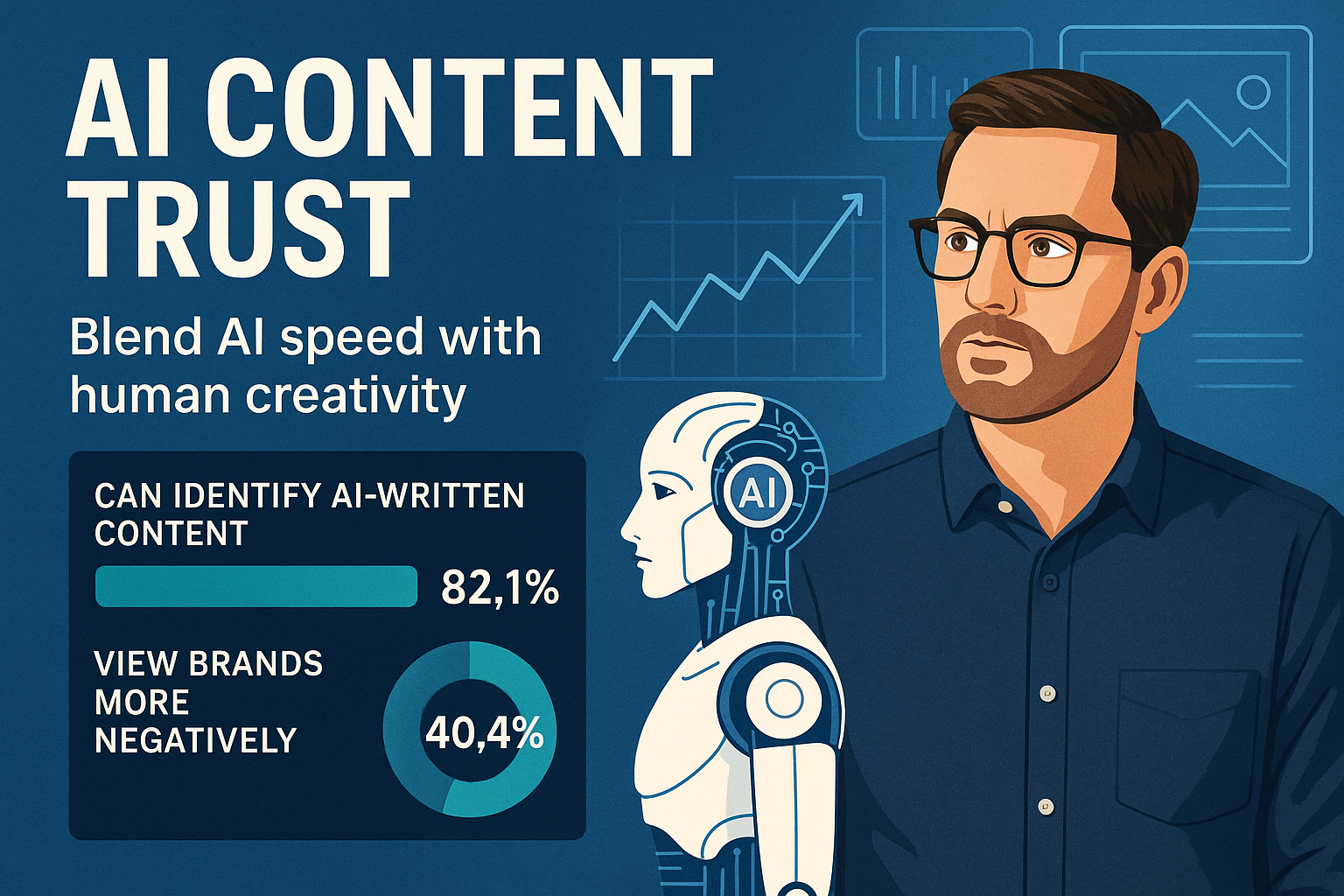
In the fast-paced digital landscape, marketers are leaning more than ever on AI to create content at scale. From blogs to social media posts, and even video scripts, AI tools are delivering unprecedented speed and convenience. However, a growing body of research shows that consumers can often tell when content is AI-generated—and they don’t like it.
According to a recent Hookline& study, 82.1% of Americans report being able to identify AI-written content. More alarmingly, 40.4% of these individuals view brands more negatively upon realizing content was generated by AI. These statistics reveal a critical issue: while AI can expedite content production, it can also damage brand perception if not used thoughtfully.
The SEO Implications of AI Content
Marketers might assume that as long as AI content is keyword-optimized, it will perform well in search engines. But Google’s updated search rater guidelines suggest otherwise. The search giant now penalizes content that shows:
- “little to no effort”
- “little to no originality”
- “adds no value”
This means that generic, formulaic AI content not only fails to impress readers, it also risks being deprioritized by Google’s algorithms. Google is not against AI content per se, but it is clear that quality, originality, and value remain paramount.
The Rise in AI Content Use
An NP Digital study revealed that an increasing number of marketers are turning to AI to produce various types of content assets, including text, images, and videos. This trend is understandable: AI is cost-effective and allows for rapid content generation. However, the growing prevalence of AI content is also contributing to a saturation of the digital space with low-effort, low-impact materials.
As a result, consumer skepticism is increasing, and digital audiences are becoming more discerning. In this climate, simply “publishing more” is no longer a viable strategy.
The Solution: Human-AI Collaboration
So how can marketers leverage AI without harming their brand or SEO rankings? The answer lies in integrating human oversight and creativity into the content creation process.
1. Start with AI, Finish with Human Editing
Use AI for initial drafts or to generate ideas, but always involve a human editor to refine tone, ensure originality, and inject authentic insights. This approach maintains speed while enhancing content quality.
2. Focus on E-E-A-T
Google prioritizes content that demonstrates Experience, Expertise, Authoritativeness, and Trustworthiness (E-E-A-T). Human input is crucial for meeting these standards, especially in industries like law, healthcare, and finance.
3. Add Real Value
Ensure that each piece of content answers a real question, solves a problem, or delivers a unique perspective. Data-backed insights, expert commentary, and case studies go a long way toward building trust.
4. Optimize for Structure and Purpose
Good content is not just about what is said, but how it’s structured. Use proper headers, concise paragraphs, and clear calls to action. AI tools can assist here, but humans should validate the final format for flow and readability.
Conclusion: Quality Over Quantity
In today’s digital environment, the content game has shifted. Speed and volume are no longer the only metrics that matter. Brands must prioritize credibility, engagement, and value. The most effective strategy blends the efficiency of AI with the authenticity of human touch.
This balanced approach not only preserves brand integrity but also aligns with evolving consumer expectations and search engine standards. It’s not about ditching AI; it’s about using it wisely.